Virtual Inspections: An Evolving Landscape in the Electrical Industry
During COVID-19, virtual electrical inspections entered the scene as a way to minimize contact and keep projects moving forward. Virtual inspections can be a convenient and effective choice when cell service is dependable, appointments are timely, and projects stay on-task. However, when it’s necessary for a contractor to return to a property a second time or there’s a long wait time, the process can be inefficient. Consequently, many contractors are concerned about mandatory virtual inspections. In this article, we will explore some of these concerns and answer some common questions.
Logistical Concerns Surrounding Virtual Inspections
In the field, if the installer knows the permit number, scheduling is as simple as clicking a button on the permit and selecting the desired time. If that time slot is unavailable, they can try another time slot. If the wait time is too long, they can inform their shop or schedule a local inspector for an in-person inspection. Alternatively, installers can contact the local inspector to remove the virtual inspection placeholder from the permit and schedule online.
The Minnesota Department of Labor and Industry (MN DLI) states that electrical contractors are not required to return to projects for virtual inspections, and contractors shouldn’t have to wait longer than 45 minutes for their inspection. Most installers estimate project completion time and schedule their virtual inspections when they arrive on-site or as their project nears completion, theoretically decreasing wait time.
Quality Concerns Surrounding Virtual Inspections
Some contractors are concerned about the quality of virtual inspections and worry that the process might be exploited. However, you can rest assured that virtual inspectors are thorough and do quality work! The inspectors inspect while panels are still open and can ask the electrician questions while they are still on-site and able to make corrections.
Previously, all virtual inspectors worked as field inspectors, and they’re trained to identify when something doesn’t look right. If they suspect an issue, they refer the inspection back to the field staff. The documentation process for virtual inspections is robust. Each inspection is date-stamped, the GPS location is verified, pictures of the reviewed areas are uploaded to the permits, and the inspection report is generated in real time.
A Staffing Increase to Combat Virtual Inspection Backlog
Currently, virtual inspections are available in many outstate areas and within most of the metro. In August, 4.5 inspectors conducted over 1,900 virtual inspections, and starting the week of September 16th, another inspector was added, opening five time slots per fifteen minutes most days. Busy times are also tracked to identify any backlogs. With an additional staff member, these backlogs should be all but eliminated.
Virtual Inspection Frequently Asked Questions
Are virtual inspections mandatory?
Currently, virtual inspections are not mandatory. At the same time, MN DLI is strongly encouraging contractors to perform rough-in inspections with a three-circuit maximum to introduce them to the technology. The department does not refuse in-person inspections if the contractor is opposed to virtual inspections, however.
The virtual inspection program aims to reduce overall drive time for local inspectors by minimizing or eliminating traveling time for minor inspections. Consequently, inspectors can spend more time on larger projects, enforcing code compliance. This program, like the transition from paper permits to electronic permits, will take time for contractors to become accustomed to. The department suggests that contractors try it and communicate with the inspector if their experience is not positive. Improvements will be made to ensure the program’s success.
Which projects call for virtual inspections?
Please refer to the MN DLI webpage to understand which scenarios allow for virtual inspections. It’s important to note that the time allotted for virtual inspections is 15 minutes. If a contractor schedules a virtual inspection and the scope of work changes, they can notify the local inspector to remove the virtual placeholder on the permit and schedule an in-person inspection. The virtual team may complete the inspection or decide to have the contractor reschedule with the local inspector, depending on the scope of work.
Why does the individual holding the camera on-site need to be a licensed electrician?
Currently, the department does not allow apprentice electricians or homeowners (on behalf of the contractor) to conduct the virtual inspection because they are not legally allowed to perform the corrections if needed.
How much does a virtual inspection cost?
The greatest concern with the virtual inspection process is the additional cost for customers. While some contractors report that virtual inspections result in less cost, a significant number report greater payroll expenses.
The department understands that the contractor’s virtual inspection experience may not be perfect every time due to technology or connectivity issues. However, they do not believe that contractors will lose money. MN DLI knows that changes will need to happen for most contractors, but if the program is used properly in the field, it will save time.
For example, contractors consistently complete furnace and AC inspections in about 6-8 minutes. By the time a staff member or electrician calls to schedule an in-person inspection and makes arrangements with the owner for the inspector to gain entry to the site, this could take more than the 15 minutes allotted for contractors to complete the virtual inspection.
Plus, the virtual inspection does not inconvenience the customers. If there are any electrical corrections with the in-person process, the contractor would need to return to the property and possibly schedule an additional inspection. Virtual inspections allow for corrections in real time. Time saved is money saved both for the customer and the electrician. And with more time, an electrician can get more jobs completed each day, which increases revenue.
Is there a phone number that members can call when they have questions?
No. The MN DLI would prefer that the electrical contractor try to contact their local inspector or supervisor first. The inspector’s contact information is on the electrical permit. Otherwise, they can call 651.284.5026 if they have electrical code-related questions or email DLI at [email protected]. The voicemail goes directly to DLI Electricity, and questions are dispersed to field supervisors statewide. The MN Department of Labor and Industry prides itself in getting matters resolved within 24 hours.
To find your inspector, search on the “local code lookup” page: https://workplace.doli.state.mn.us/jurisdiction/
The lookup is updated through our permitting system, so it is always up to date. Contractors can search by city, township, or county. See the screenshot below for a quick search for Albert Lea….
Once the search opens to the city or county, scroll down to the “Electrical” section. The search also includes the municipal areas. They show up as “local authority” and include a phone number.

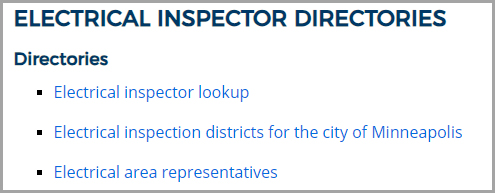
All of the directories can be accessed at: https://www.dli.mn.gov/business/electrical-contractors/electrical-inspector-directories
We hope this addresses some common questions and concerns. We are committed to assisting MN DLI in making virtual inspections work better for the industry, and we always appreciate your feedback. MN DLI encourages contractors to reach out to John McNamara ([email protected]) or Dean Hunter ([email protected]) if they have further questions or want to discuss how this impacts their bottom line.
*Dean Hunter and John McNamara were consulted for the creation of this article. The Electrical Association appreciates their contributions to our industry and their openness to feedback and guidance.